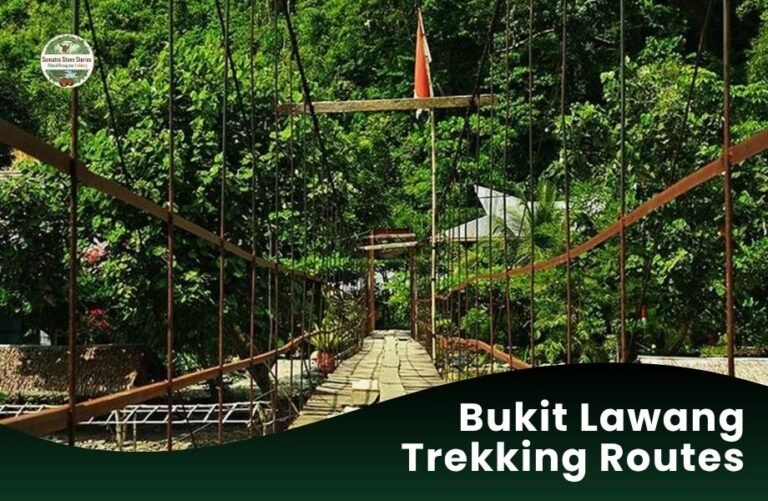
Bukit Lawang sits on the edge of Gunung Leuser National Park, one of the last places on earth where wild Sumatran orangutans still swing freely through the canopy. The village itself is small, built along the Bohorok River, but the trails that start here open up thousands of hectares of untouched rainforest. Most visitors arrive with one question. Which route should I actually walk?
The honest answer is that Bukit Lawang has no single trekking route. There is a network of trails that guides combine depending on how many days you have, how fit you are, and what you want to see. Some routes loop back to the village in an afternoon. Others push deep into the park and only come out days later near Ketambe or Tangkahan. I will explain how the trails work, what to expect on each one, and how to choose the right length for your trip.
How the trekking network is structured
Every trek out of Bukit Lawang starts the same way, on foot from the village, crossing the river and climbing into the forest edge where semi-wild and wild orangutans are most often spotted. From that point, the trails branch. Shorter routes stay in this outer belt of forest, where the terrain is gentler and sightings are frequent. Longer routes continue further into the park’s interior, where the jungle gets steeper, the trails get quieter and the wildlife becomes more genuinely wild rather than habituated to visitors.
Guides generally group these trails by how many days they take to walk, since the terrain, camping spots and river crossings all change with distance from the village. A one-day loop and a five-day expedition are not really different lengths of the same walk. They pass through different parts of the ecosystem entirely.
Short routes: half day to two days
The trails closest to Bukit Lawang are also the busiest, since they suit travelers with limited time or lighter fitness. A half-day or full-day trek usually loops through the forest edge, past feeding platforms where semi-wild orangutans still gather, before returning to the village or finishing with a tubing ride down the Bohorok River. It’s a good introduction to the jungle without heavy physical demand. Our 1 day Bukit Lawang trek covers this route in full.
Add an overnight camp and the trail extends further from the village, giving more time on foot and a better chance of spotting orangutans away from the more visited feeding areas. Wildlife along these trails includes Thomas leaf monkeys, long-tailed macaques and, with some luck, the shyer species that stay clear of day trippers. Details on the two-day version of this route are on our 2 day trek page.
Mid-range routes: three to four days
Once a trek stretches to three or four days, the route leaves the outer forest belt behind. Trails climb steeper ridges, cross the river at more points and camp deeper inside Gunung Leuser, where sightings tend to feel less staged, and the forest itself gets denser and quieter. These routes suit travelers who want more than a taste of the jungle but don’t have a week to spare.
This is also where trail choice starts to matter for a different reason. Similar-sounding four-day trekking routes can take very different paths depending on the guide, some tracking known orangutan territory more closely, others prioritizing river scenery or cave systems along the way. Our 3 day trek page breaks down exactly which trail each option follows.
Long routes: five to six days
The longest treks from Bukit Lawang push into the most remote parts of the park, often approaching the base of Gunung Leuser itself or connecting toward Ketambe on the other side of the range. These routes involve serious jungle camping, multiple river crossings, and a level of physical difficulty that goes well beyond the shorter walks. They’re built for travelers who want genuine wilderness rather than a scenic add-on to a Sumatra itinerary.
Because these routes are physically demanding, remoteness and terrain matter more than the number of days alone when deciding if one is right for you. Our 5-day Bukit Lawang trek goes into the specific terrain and camping setup for each.
What you’ll actually see on the trail
Across every route, the star of the forest is the Sumatran orangutan, one of only two orangutan species left in the wild and found nowhere outside Sumatra and Borneo. Sightings are never guaranteed on any trail, since these are wild animals moving through their own territory, but guides know the areas where orangutans are most active at different times of day.
Beyond orangutans, the trails pass through habitat for Thomas leaf monkeys, white-handed gibbons, macaques and an enormous range of birdlife and plant species. The Bohorok River runs alongside several routes and features in almost every trek, whether as a lunch stop, a camping spot or the tubing finish that many treks end with.
Choosing the right route
The right trail comes down to three things. How many days you have, how physically demanding a trek you want, and whether you’re after a light introduction to the jungle or a genuine expedition. A short trail out of Bukit Lawang works well if you’re short on time or trekking with kids or older travelers. The mid-length routes suit most independent travelers who want a proper multi-day jungle experience without extreme physical demands. The longest routes are for travelers specifically looking for remote, difficult terrain and are best suited to those already comfortable with multi-day hiking.
At Sumatra Stone Stories, our guides work in small groups and follow ethical trekking practices set by the local guide community, keeping a respectful distance from wildlife and avoiding feeding or contact with orangutans on any route.
Trekking beyond Bukit Lawang
Several of the longer routes don’t loop back to the village at all. They exit near Tangkahan or connect toward onward destinations like Berastagi and Lake Toba, letting trekkers continue their Sumatra trip without backtracking. If you’re planning a route that continues past Bukit Lawang, it’s worth checking transport options for that leg before you commit to a trail.
Frequently Asked Questions
What is the easiest trekking route in Bukit Lawang?
The half day and one-day routes are the easiest, staying on gentler terrain close to the village and finishing with a river return rather than a long jungle exit.
Which route gives the best chance of seeing orangutans?
Sightings happen across all routes since orangutans move freely through the whole forest, but guides generally say the two to four day routes balance a good chance of sightings with manageable difficulty.
Do longer trekking routes require previous hiking experience?
The five and six day routes involve steep terrain, multiple river crossings and jungle camping, so previous multi day hiking experience is genuinely useful, though not always required if you’re reasonably fit.
Can a trekking route end somewhere other than Bukit Lawang?
Yes. Some longer routes exit near Tangkahan and connect toward Berastagi and Lake Toba rather than returning to the village.
Is trekking in Bukit Lawang possible year-round?
Trekking runs throughout the year, though trails can get slippery in the wetter months, so guides may adjust the route depending on recent rainfall.